The Integration Layer Nobody Is Talking About — And Why It's Stalling Your Modernization Efforts
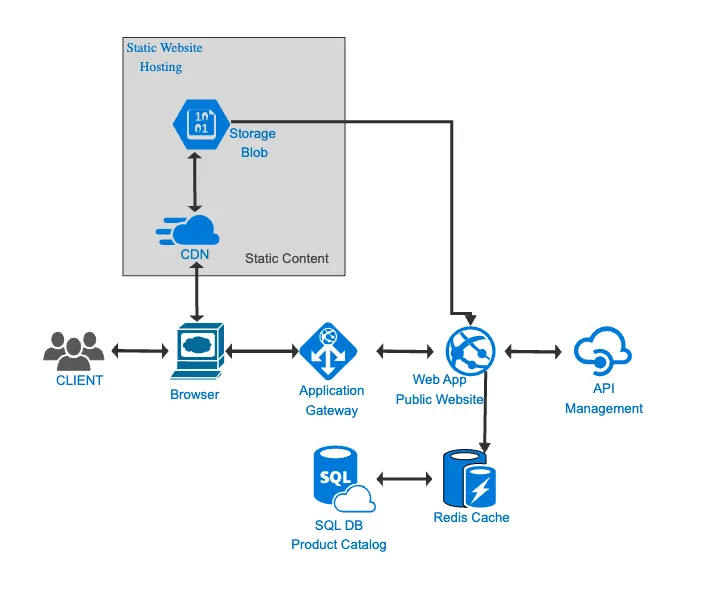
Photo: API network integration diagram technology infrastructure, via edrawcloudpublicus.s3.amazonaws.com
The Quiet Bottleneck Hiding in Plain Sight
Most digital transformation conversations gravitate toward the visible: cloud migrations, new customer-facing platforms, data dashboards, and workflow automation tools. These are the initiatives that earn budget approvals and board-level attention. What rarely enters the boardroom discussion, however, is the underlying integration layer — the web of APIs that determines whether all those investments actually communicate, scale, and evolve together.
For mid-market organizations navigating rapid modernization, this oversight carries a steep price. API architecture decisions made in the early stages of a transformation project have a compounding effect. A shortcut taken in year one can quietly multiply into a structural constraint by year three, limiting the very agility the transformation was meant to deliver.
Why API Design Decisions Feel Low-Stakes Until They Aren't
In the early phases of a modernization effort, speed is often the dominant priority. Teams are under pressure to demonstrate progress, deliver working software, and justify investment. In that environment, API design frequently becomes a secondary concern — something to be addressed later, once the core systems are in place.
This logic is understandable, but it reflects a fundamental misunderstanding of how integration debt accumulates. Every API endpoint built without a coherent versioning strategy, every data contract defined inconsistently across services, and every authentication mechanism bolted on as an afterthought adds friction to every future integration effort. Over time, what began as a series of small compromises solidifies into an architecture that actively resists change.
The result is a paradox: companies that invested in modernization to move faster find themselves slower than before, not because their new systems are inadequate, but because the pathways between them were never properly engineered.
Common Patterns That Compound Over Time
Through work with mid-market clients across a range of industries, several recurring API architecture patterns tend to create the most significant long-term drag on transformation efforts.
Inconsistent data contracts. When different teams or vendors define data structures independently, downstream integrations become fragile. A change to one service's response format can break multiple dependent systems simultaneously, creating cascading failures that are difficult to diagnose and expensive to remediate.
Absence of versioning discipline. APIs without a clear versioning strategy force consuming applications into a difficult choice: either absorb every upstream change immediately or fall behind on critical updates. Neither option is sustainable at scale.
Point-to-point integration proliferation. Early in a transformation, connecting two systems directly seems efficient. As the number of systems grows, however, a web of direct connections becomes nearly impossible to maintain. The failure of any single connection can ripple unpredictably across the entire ecosystem.
Security applied as an afterthought. Authentication and authorization frameworks that are grafted onto existing APIs rather than built into their design introduce vulnerabilities and create compliance exposure — a concern that has grown significantly as US regulatory scrutiny of data handling practices has intensified.
Conducting an Honest API Architecture Audit
Before any remediation effort can begin, organizations need a clear-eyed assessment of where their current integration layer stands. This is not a purely technical exercise. It requires input from both technical and business stakeholders, because the consequences of poor API architecture are ultimately business consequences — delayed product releases, failed vendor integrations, and an inability to respond quickly to market opportunities.
An effective audit should examine several dimensions. First, catalog every active API across the organization, including those managed by third-party vendors. Many mid-market companies are surprised to discover how many undocumented or informally maintained integrations exist within their environment.
Second, assess consistency. Are data models standardized across services? Are naming conventions applied uniformly? Are authentication mechanisms aligned with current security standards? Inconsistency at this level is a reliable predictor of future integration friction.
Third, evaluate governance. Who owns each API? What is the process for making changes? How are consuming applications notified of updates? The absence of clear governance structures is often a more significant problem than any individual technical deficiency.
A Framework for Realigning Your Integration Strategy
Once the audit is complete, the path forward typically involves three parallel workstreams.
Stabilization. Address the highest-risk integration points first — those that are either actively causing failures or that sit on the critical path of upcoming transformation initiatives. This is not the time for wholesale redesign; the goal is to reduce immediate exposure while longer-term improvements are planned.
Standardization. Establish and enforce API design standards across the organization. This includes documentation requirements, versioning conventions, error handling patterns, and security baselines. These standards should be treated as organizational policy, not merely technical guidelines, with clear accountability for compliance.
Strategic architecture. With stabilization and standardization underway, the organization is positioned to make deliberate architectural decisions about its long-term integration model. For many mid-market companies, this involves evaluating whether an API gateway or service mesh approach is appropriate for their scale and complexity — tools that provide centralized visibility, security enforcement, and traffic management across the entire integration layer.
The Business Case for Getting This Right
Investing in API architecture may lack the immediate visibility of a new customer portal or a cloud migration, but its business impact is substantial and measurable. Organizations with well-designed integration layers are faster to onboard new technology partners, more resilient in the face of vendor changes, and better positioned to leverage emerging capabilities — whether that means incorporating AI-driven data services, expanding into new digital channels, or responding to acquisition opportunities that require rapid systems integration.
Conversely, organizations that continue to defer this investment will find their transformation ceilings getting lower over time. The technical debt embedded in a poorly designed integration layer does not remain static. It grows with every new connection added, every workaround implemented, and every system brought online without a coherent integration plan.
Transformation Requires a Foundation Worth Building On
Digital transformation is ultimately an architectural endeavor. The platforms, tools, and applications that organizations deploy are only as effective as the infrastructure designed to connect them. For mid-market companies serious about realizing the full value of their modernization investments, the integration layer is not a background concern — it is a foundational one.
Addressing API strategy proactively, before it becomes a crisis, is one of the highest-leverage actions a technology leader can take. It is also one of the clearest demonstrations that a transformation program is being managed with genuine long-term discipline, rather than short-term momentum.