The System You're Calling Obsolete Might Be Your Most Valuable Asset

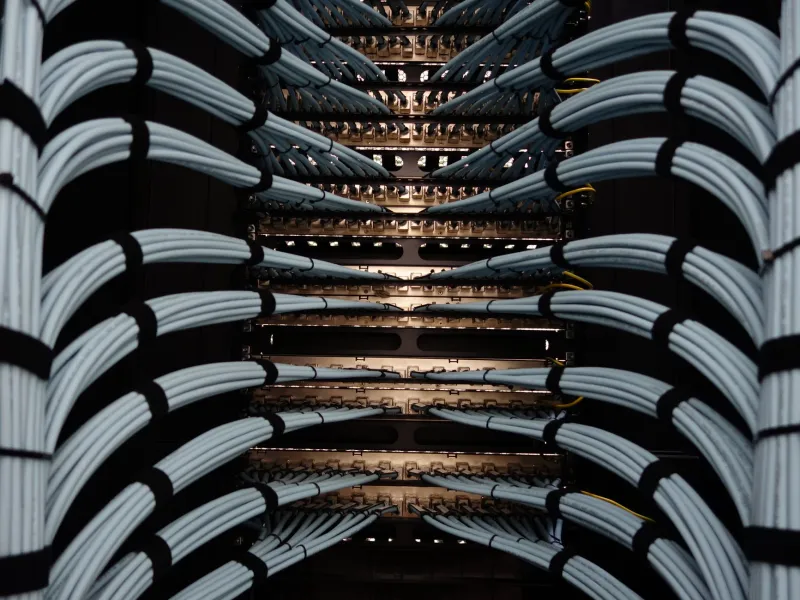
Photo: engineer analyzing server infrastructure in modern data center, via img.freepik.com
The Replacement Reflex Is Costing Companies More Than They Realize
There is a pattern that surfaces repeatedly in technology planning conversations across US mid-market companies. A business leader identifies a system that has been in production for eight, ten, or fifteen years. The user interface looks dated. The vendor support contract has grown expensive. A competitor appears to have moved on to something newer. The instinct that follows is almost automatic: it is time to replace.
That instinct, while understandable, is frequently wrong — and the financial consequences of acting on it prematurely are significant.
The uncomfortable truth is that a system does not become obsolete simply because of its age. It becomes obsolete when the organization makes a deliberate or accidental decision to stop investing in it. The distinction matters enormously, because it shifts the conversation from a procurement decision to a strategic one.
Age and Obsolescence Are Not the Same Variable
Consider how the aviation industry treats aircraft. A commercial plane built in the 1990s is not automatically grounded because newer models exist. Engineers assess structural integrity, avionics capability, fuel efficiency, and maintenance cost trajectories. The decision to retire or upgrade a specific component is made with precision, not sentiment.
Enterprise software deserves the same analytical rigor.
A custom ERP system built a decade ago may still accurately model the business logic it was designed to serve. The workflows it supports may still reflect how the company actually operates. The data it holds may be irreplaceable in its context and relationships. None of that disappears because the underlying framework is no longer the newest option on the market.
What does degrade over time — often due to neglect rather than inherent limitation — is the system's ability to integrate with newer tools, scale to handle increased transaction volumes, or accommodate evolving compliance requirements. These are solvable engineering problems. They are not inherently arguments for starting over.
Two Real-World Outcomes Worth Examining
A regional logistics company operating across the Midwest faced mounting pressure from its board to replace a warehouse management system that had been in use since the mid-2000s. The system was slow in certain reporting modules, and the development team that originally built it had long since turned over. Leadership assumed the technology was at end-of-life.
Before committing to a full replacement — which was quoted at approximately $2.4 million over 18 months — the company engaged a technical assessment team. That assessment identified three root causes behind the performance issues: an unoptimized database indexing structure, a reporting layer that had never been refactored after a data model change five years prior, and a lack of caching on the most frequently accessed queries.
Targeted remediation work, completed in under four months, resolved all three issues at a fraction of the projected replacement cost. The system continued serving the business for an additional six years before a genuine strategic need — integration with a real-time carrier network — finally justified a purpose-built replacement.
Contrast that with a specialty manufacturer on the East Coast that pursued a complete ERP overhaul based largely on the perception that their existing system was too old to be credible. Eighteen months into the implementation, the new platform had still not been fully configured to handle the company's custom pricing logic — logic that the previous system had managed without issue. The project ultimately cost 40 percent more than budgeted and required a parallel operation period that stretched nearly two years.
The lesson in both cases is not that replacement is always wrong. It is that replacement without rigorous prior analysis is almost always premature.
A Framework for Making the Distinction
Distinguishing between a system worth evolving and one genuinely ready for retirement requires asking four structured questions.
First, what is the system's current capability ceiling? Every system has a ceiling — the maximum performance, scale, or functionality it can realistically achieve given its underlying architecture. If that ceiling still sits well above the organization's current and projected needs, replacement is not yet a strategic necessity.
Second, what is the marginal cost of continued investment? A system that requires disproportionate engineering effort to maintain or extend — relative to the value it delivers — is a stronger candidate for replacement than one where targeted investments yield high returns. This is a ratio, not an absolute number.
Third, what is the risk profile of the data and process knowledge embedded in the system? Many organizations dramatically underestimate how much institutional knowledge lives inside a long-running system. Custom business rules, edge-case handling, and years of refined data relationships are not automatically portable. A replacement project that fails to account for this creates a knowledge transfer risk that can materialize as operational failures post-launch.
Fourth, is the perceived obsolescence technical or organizational? In many cases, what looks like a failing system is actually a symptom of underinvestment, inadequate documentation, or staff turnover that has left the system poorly understood internally. These are organizational problems, and replacing the software does not solve them.
Strategic Modernization as a Competitive Discipline
The companies that consistently extract the most value from their technology investments are not the ones that replace systems most aggressively. They are the ones that maintain the discipline to evaluate each system on its actual merits, invest strategically to extend useful life where appropriate, and replace decisively only when a genuine capability gap has been clearly defined.
This approach requires a level of technical clarity that many organizations find difficult to develop internally — particularly when the teams managing legacy systems are stretched thin and lack the bandwidth for structured assessment work.
At OleanSoft, we see this challenge regularly. The organizations that come to us having already done the analytical work — knowing precisely what their existing systems can and cannot do — are invariably better positioned to make sound modernization decisions, whether those decisions lead to targeted investment or full replacement.
The systems you are managing today represent years of accumulated investment, business logic, and operational refinement. Before concluding that any of them has run its course, it is worth asking a more precise question: has it genuinely reached its limit, or has it simply been left behind?