When Stability Becomes a Trap: Rethinking the Tech Infrastructure You Built to Last

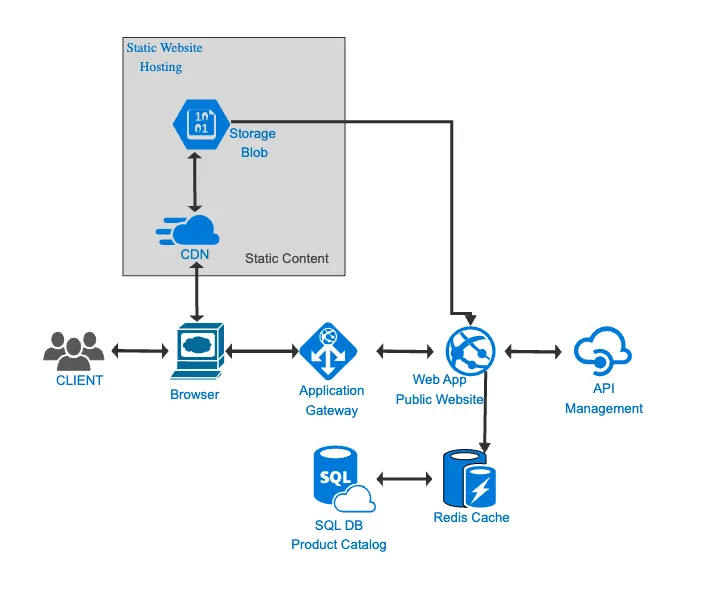
Photo: Ritdotin, CC0, via Wikimedia Commons
The Problem With Building for the Problem You Have
There is a particular kind of organizational pride that comes with a stable, well-functioning technology stack. Systems run. Integrations hold. The team knows where everything lives. For a period of time — sometimes years — this reliability feels like a competitive advantage.
Then the market shifts. A new channel emerges. A competitor moves faster. An acquisition creates an urgent need to consolidate platforms. And suddenly, the infrastructure built to solve last year's problems is the very thing making this year's opportunities unreachable.
This is not a story about poor planning. In most cases, it is the opposite. Companies that invest seriously in technology tend to build with intention, selecting tools and architectures that address real pain points with genuine rigor. The difficulty is that those pain points are always a reflection of the business as it exists today — not the business it will need to become.
How Architectural Decisions Quietly Foreclose Options
Consider a mid-sized distribution company that, facing pressure to reduce order processing errors, invests in a tightly integrated ERP system. The implementation is successful. Error rates drop. Efficiency improves. The system becomes deeply embedded in daily operations — which is, by design, exactly what was intended.
Three years later, the company acquires a regional competitor and needs to merge fulfillment workflows. What was once a strength — deep integration and centralized control — is now an obstacle. Every change requires navigating a web of dependencies. Timelines stretch. Costs escalate. The window for capturing acquisition synergies narrows.
Or consider a financial services firm that builds a customer-facing portal optimized for desktop interaction, reflecting how their clients actually behaved at the time of development. That decision, sensible in the moment, requires substantial rework when mobile usage among their client base accelerates faster than anticipated.
Neither organization made a mistake. They made rational decisions based on available information. But rationality applied only to the present moment is insufficient when technology investments are expected to serve a business across multiple strategic cycles.
The Agility Illusion
Many organizations believe they have built flexibility into their systems when they have actually built the appearance of flexibility. A platform that offers configuration options is not the same as an architecture that supports genuine structural change. A system that integrates with current partners is not the same as one designed to accommodate partners that do not yet exist.
True architectural agility requires deliberate choices — often ones that feel unnecessary at the time they are made. Loose coupling between services means accepting some coordination overhead when things are stable, in exchange for the ability to swap components when circumstances demand it. API-first design means investing in abstraction layers that add short-term complexity but protect long-term optionality. Modular data structures mean resisting the temptation to optimize schemas for current reporting needs in ways that will constrain future analytics requirements.
These are not instinctive decisions. They require technology leadership to hold two frames simultaneously: the operational reality of the present and the strategic uncertainty of the future.
Building Systems That Anticipate Change
The most resilient technology infrastructures share a common orientation. Rather than being designed around current workflows, they are designed around the types of change the business is most likely to encounter — even when the specific nature of that change is unknown.
This begins with a different kind of requirements conversation. Instead of asking only what the system needs to do today, effective technology planning asks what the business expects to be true in three to five years, what decisions are being deferred because the current infrastructure cannot support them, and where the greatest sources of strategic uncertainty lie.
From those answers, it becomes possible to identify which components of a technology stack genuinely need to be durable and which need to be replaceable. Not everything requires the same architectural treatment. A core data model may warrant significant stability investment. A customer-facing interface, by contrast, may benefit from being built with the explicit assumption that it will need to evolve on a shorter cycle.
This kind of differentiated approach — treating different system components according to their likely rate of change — is one of the most practical frameworks available to organizations that want stability without rigidity.
The Organizational Dimension
Technology architecture does not exist in isolation. The structure of a company's systems tends to mirror the structure of its teams — a principle that software engineers have long recognized and that business leaders often underestimate.
Organizations that struggle to evolve their technology stacks frequently discover that the real constraint is not technical. It is organizational. Teams that own specific systems develop institutional investment in those systems. Incentives that reward uptime and stability create cultural resistance to the kind of deliberate disruption that modernization requires. Budget cycles that evaluate technology spending on a year-by-year basis make it difficult to justify investments whose primary value is optionality rather than immediate output.
Addressing these dynamics is not a technology problem. It is a leadership and governance problem. Companies that successfully build adaptable infrastructure tend to have executive sponsors who frame technology evolution not as a cost center activity but as a strategic capability — one that directly determines how quickly the organization can respond to market conditions.
From Reactive Modernization to Proactive Architecture
The pattern most organizations fall into is reactive: they modernize when the pain of the existing system becomes acute enough to justify the disruption of change. This approach is understandable, but it is expensive. Modernization undertaken under pressure almost always costs more, takes longer, and delivers less than modernization undertaken from a position of stability and deliberate planning.
The alternative is to treat architectural review as an ongoing discipline rather than a crisis response. This means establishing regular cadences for evaluating whether the current technology stack still aligns with the direction of the business — not just whether it is functioning correctly. A system can be operationally sound and strategically misaligned simultaneously. The goal is to identify that misalignment before it becomes a constraint.
It also means building the internal capacity — or the right external partnerships — to make incremental architectural improvements continuously, rather than accumulating technical debt until a full-scale transformation becomes unavoidable.
The Real Measure of a Technology Investment
Stability, reliability, and performance are necessary qualities in any enterprise technology system. But they are not sufficient. The fuller measure of a technology investment is whether it expands or contracts the organization's range of future options.
Infrastructure that runs flawlessly today while quietly narrowing what is possible tomorrow is not as valuable as it appears. Recognizing that distinction — and building accordingly — is what separates organizations that lead through change from those that are perpetually catching up to it.