Scalable by Design, Rigid in Practice: The Uncomfortable Truth About Modern Tech Stacks
Photo: US GOV OMB, Public domain, via Wikimedia Commons
When 'Future-Proof' Becomes a Marketing Term
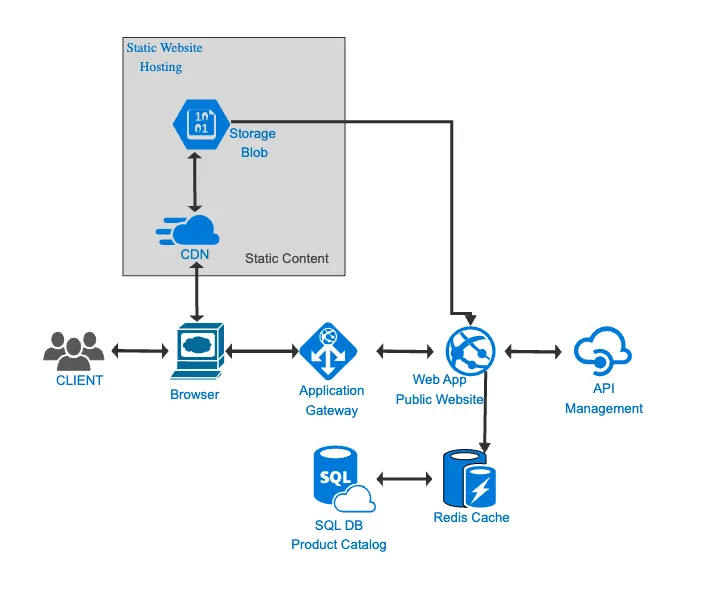
Every enterprise software purchase comes with a narrative. Vendors present elegant diagrams of modular components, open APIs, and cloud-native scalability. Sales engineers walk prospects through roadmaps that extend three, sometimes five years into the future. The language is consistent across industries: flexible, extensible, built to grow with you.
Yet technology leaders at mid-market companies across the United States are encountering a pattern that contradicts this narrative almost routinely. Platforms acquired with confidence — often at significant capital investment — are revealing themselves, years later, to be architecturally rigid, expensive to modify, and deeply resistant to integration with newer technologies. The platforms haven't changed. The business environment around them has. And therein lies the paradox.
The problem is not that vendors are dishonest. It is that the definition of 'future-proof' is inherently time-bound, and the conditions under which a platform was designed rarely match the conditions a business will face five years after deployment.
The Architecture Gap: What Modular Really Means
Modularity is perhaps the most misunderstood concept in enterprise software procurement. When vendors describe their platforms as modular, they typically mean that features can be toggled, licensed separately, or configured within a predefined boundary. What they rarely mean is that the underlying data model, integration logic, or processing architecture can be restructured without significant professional services engagement.
This distinction matters enormously. A platform that allows you to add a new reporting module is not the same as a platform that allows you to restructure how data flows between your CRM, ERP, and customer-facing applications. The former is configuration. The latter is architecture. Mid-market organizations frequently invest in the former while believing they have purchased the latter.
The consequences surface gradually. A new business line requires data that the existing schema cannot accommodate cleanly. A regulatory change demands audit capabilities the platform was never designed to support natively. A strategic acquisition brings incompatible technology that must somehow be connected. Each of these scenarios triggers the same response: expensive customization, workarounds that accumulate as technical debt, and growing dependency on the vendor's professional services organization.
How Technical Debt Compounds in Plain Sight
Technical debt is often discussed as though it were a discrete event — a bad decision made at a specific moment. In practice, it accumulates the way interest compounds: slowly at first, then suddenly in ways that feel disproportionate to any single choice.
Consider the trajectory of a typical enterprise platform deployment. In the first two years, the organization is in configuration and adoption mode. Customizations are modest, integrations are straightforward, and the vendor's support structure is actively engaged. By year three, the business has grown around the platform in ways that were not fully anticipated. Workarounds have been built. Data has been duplicated across systems to compensate for integration gaps. A small team has developed institutional knowledge of the platform's quirks that is not documented anywhere.
By year five, the organization is maintaining a system that no longer reflects its operational reality. Upgrading to a newer version of the platform risks breaking the customizations that the business now depends on. Migrating away requires untangling years of accumulated integration logic. The platform that was purchased as an enabler has become a constraint that shapes — and limits — strategic decisions.
This is not a failure of the technology alone. It is a failure of the evaluation framework used at the time of purchase, and often a failure to invest in architectural governance throughout the platform's lifecycle.
Evaluating Resilience Beyond the Sales Cycle
The question organizations should be asking is not whether a platform is scalable in the abstract. The more productive question is: under what conditions does this architecture become expensive to change, and how likely are those conditions to occur within our planning horizon?
This reframing shifts the evaluation from vendor-provided benchmarks to business-specific risk modeling. A few concrete approaches can support more rigorous assessments.
Examine the data model, not just the feature set. A platform's long-term flexibility is determined more by how it structures and stores data than by the number of features it offers at launch. Organizations should request schema documentation and assess whether the data model can accommodate the entity types and relationships their business is likely to require in three to five years.
Test integration boundaries before committing. Many platforms offer robust native integrations with a curated set of partners while presenting significant friction for anything outside that ecosystem. Proof-of-concept integration work with the specific systems an organization relies on — not generic API documentation reviews — reveals far more about practical extensibility.
Evaluate the vendor's upgrade history. How a vendor has managed major version transitions in the past is a meaningful predictor of future behavior. Organizations that have lived through a vendor's platform consolidation or architectural rewrite can offer candid assessments that no sales reference call will provide.
Quantify the customization cost ceiling. Most enterprise platforms have a point at which customization becomes more expensive than migration. Understanding where that ceiling is — and how close current usage is to approaching it — provides a more honest picture of long-term total cost than initial licensing comparisons.
The Role of Custom Development in Architectural Resilience
One of the more counterintuitive findings in enterprise technology is that organizations with well-designed custom software components often maintain greater architectural flexibility than those who have committed entirely to commercial platforms. This is not an argument against commercial software — it is an argument for deliberate architecture.
Custom-developed components, when built to open standards and designed with clear integration contracts, can be modified or replaced without triggering cascading dependencies. They encode business logic in ways that reflect the organization's actual processes rather than approximating them within a vendor's predefined model. And they do not carry licensing structures that create financial barriers to change.
The practical implication for technology leaders is that the build-versus-buy decision should not be evaluated as a binary. The more useful question is which layers of the technology stack benefit from commercial platforms — and which layers require the kind of architectural control that only custom development provides.
Rethinking the Meaning of Resilience
Resilience in enterprise architecture is not the absence of change. It is the capacity to absorb change without disproportionate cost or disruption. A truly resilient technology stack is one that can accommodate the business decisions leadership has not yet made — not one that performs well under the conditions that existed when it was purchased.
Achieving that kind of resilience requires more than careful vendor selection. It requires ongoing architectural governance, a willingness to invest in modernization before systems reach a crisis state, and a clear-eyed assessment of the gap between vendor roadmaps and organizational needs.
The companies that navigate digital transformation most successfully are not those that found the perfect platform. They are those that built the organizational discipline to evaluate, adapt, and evolve their technology continuously — treating architecture as a strategic capability rather than a procurement outcome.